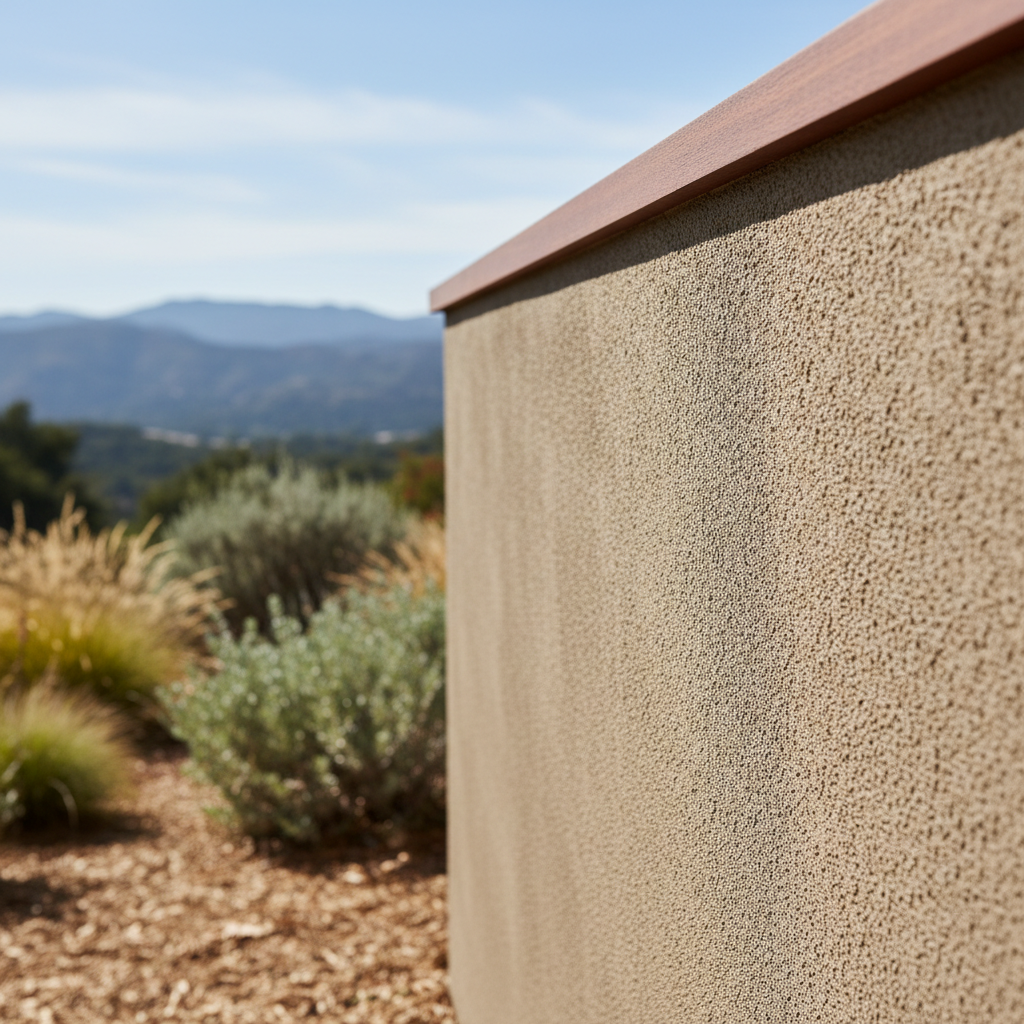
You've heard the term 'commercial stucco' thrown around, and maybe you're wondering if it's right for your home here in Portola Valley. It's a fair question, really. People often associate 'commercial' with big, impersonal buildings, but the truth is, the materials and techniques used on those properties can offer some serious advantages for residential applications too. Let's break down some of the most common questions I get about it.
What exactly is "commercial stucco" when we're talking about a house?
When I say "commercial stucco" for a home, I'm generally talking about a more robust, often thicker, and typically more durable application of traditional cement-based stucco. Sometimes we even add reinforcing elements. It's not a totally different material, you see, but rather a different specification and application method. Think of it like this: the stucco on a typical home might be a three-coat system. A commercial-grade job, though, might involve thicker base coats, more extensive lath (that's the wire mesh that holds the stucco), or even specialized additives for increased impact resistance or waterproofing. It's built to withstand more abuse, whether that's from heavy foot traffic in a commercial setting or just the general wear and tear and climate fluctuations we see around here, especially with our varied weather patterns from the valley floor up into the hills. It's tough stuff.
Is it really stronger or more durable than regular residential stucco?
Absolutely, it can be. The main goal of commercial stucco specifications is longevity and resilience. We're talking about a system designed to take a beating and keep looking good. For a home, this translates to fewer cracks over time, better resistance to impacts – like a kid's bike hitting the wall or a misplaced garden tool – and generally a longer lifespan before needing significant repairs or redashing. It's not just about the thickness, though that's part of it; it's also about the quality of the materials and the carefulness of the application. This often means more layers and stronger reinforcing mesh than a standard residential job. For a lot of folks in Portola Valley, especially those with active families or homes exposed to the elements, that extra durability is a huge plus.
Will commercial stucco look different on my house?
Not necessarily, and that's a really common misconception. The finish coat, which is what you actually see, can be exactly the same as any residential stucco finish. You can still get all the textures – smooth, sand float, dash, Santa Barbara, whatever you like – and any color you can imagine. The difference is beneath the surface. It's in the underlying layers, the scratch coat, the brown coat, and the lath system. So, from the curb, your house will look fantastic, just like you envisioned, but underneath, it's got a tougher backbone. We're not talking about some industrial, utilitarian look; we're talking about a high-performance system that can still achieve any aesthetic you want.
Does it cost a lot more to use commercial-grade stucco on a home?
Yes, typically it does cost more upfront. You're paying for more material – thicker coats, potentially more specialized lath – and often more labor because the application can be more involved and take longer. However, it's important to look at this as an investment. That higher initial cost often pays off in the long run through reduced maintenance, fewer repairs, and a longer overall lifespan for your exterior. Think about it: if you spend a bit more now to get a system that lasts 30-40 years with minimal fuss, compared to a standard system that might need significant work in 15-20 years, you're likely saving money and hassle over the life of the home. It's a value proposition, honestly.
Can commercial stucco help with insulation or soundproofing?
It can, to a degree. Stucco itself, especially a thicker, multi-coat system, adds mass to your exterior walls. More mass generally means better thermal performance and better sound attenuation. While it's not a dedicated insulation or soundproofing system like spray foam or specific acoustic panels, the added density and thickness of a commercial-grade stucco application will contribute positively to both. It can help keep your home cooler in the summer and warmer in the winter, and it can reduce outside noise, which is great if you live near a busy road or just appreciate a quieter home environment. It's a secondary benefit, but a real one.
Are there any downsides or reasons not to use it?
The main downside, as we discussed, is the higher initial cost. If budget is your absolute tightest constraint, then a standard residential stucco application might be the more practical choice. Another consideration is the weight. A thicker, denser stucco system is heavier, which your home's framing needs to be able to support. For new construction, this is usually designed in from the start. For a remodel or re-stucco project, it's something Neighborly Stucco always assesses to ensure your existing structure can handle the additional load. It's rarely an issue for typical residential construction, but it's always part of our due diligence.
Is it harder to repair if it does get damaged?
Not really harder to repair, but it might require a bit more skill and attention to detail to match the original robust application. The repair process itself is similar: identify the damage, remove the compromised material, prepare the substrate, and then apply new stucco layers. The key is ensuring the repair matches the integrity and finish of the surrounding commercial-grade stucco. A skilled stucco contractor, like us here at Neighborly Stucco, knows how to blend repairs seamlessly, both structurally and aesthetically, so you won't even know where the damage was. It's not some exotic material that only a few specialists can handle; it's just a higher standard of traditional stucco work.