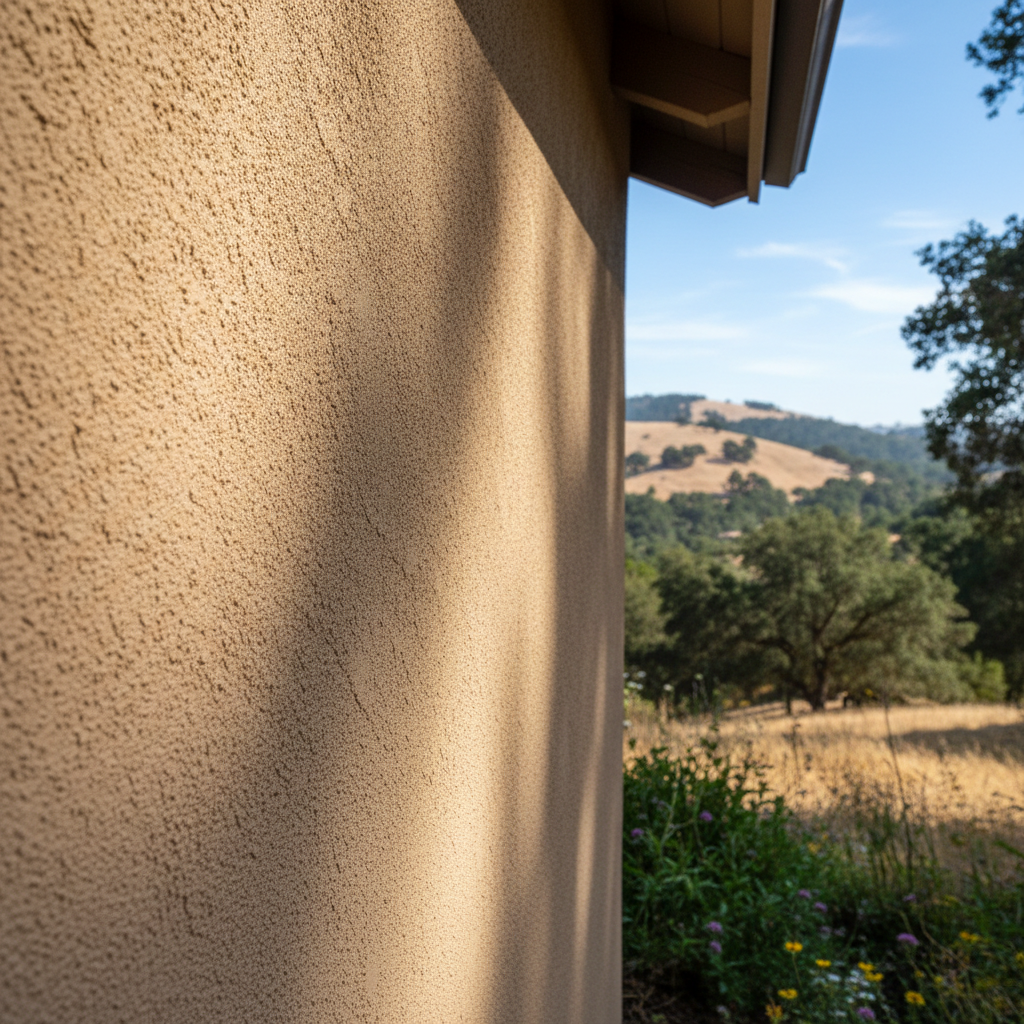
So, you've heard about commercial stucco and you're wondering if it's right for your Portola Valley home. Good question, that. It's not just for big buildings downtown, but it's definitely a different animal than the residential stuff you might be used to. I've seen plenty of homeowners get confused, so let's clear things up about what you need to know before, during, and after a commercial stucco project.
What Even IS Commercial Stucco?
When I talk about commercial stucco, I'm usually thinking about a couple of things. For starters, it often means a thicker, tougher application. We're talking multiple layers here, sometimes with heavier gauge lath, and usually a cement-based finish coat that's truly built for serious durability. Think about the stucco on a school or a fire station – it's made to take a beating and last for decades with minimal fuss. It's not always about every single component being 'commercial-grade,' but more about the system's overall strength and how it's put on.
The main benefit? Plain and simple, it's durability. It stands up better to impact, weather, and general wear and tear. Here in Portola Valley, with our occasional heavy rains and the way houses sometimes settle on those hillsides, that extra resilience can be a real advantage. It can mean fewer cracks, less maintenance, and a longer life for your home's exterior.
Before You Start: Planning & What You Can Do
Alright, you're thinking about it. So, what's step one? Research, but don't just stick to online. Go for a drive. Look at commercial buildings, even some of the older, well-kept homes in spots like Ladera or Westridge that might have a more robust stucco system. Pay attention to the texture, the thickness around windows and doors, and how it looks overall.
Before you even think about calling a pro, you can do some basic legwork. Figure out your budget. Commercial stucco systems, because they use more material and often need more skilled labor, usually cost more upfront than a standard residential application. Don't expect a cheap fix, okay? Also, consider the aesthetic. Do you want a smooth finish, a heavy dash, or something in between? Commercial applications can achieve a wide range of looks, but it's smart to have an idea.
What you absolutely shouldn't do yourself before calling a pro is try to spec out the system or buy materials. There are just too many variables, from the type of lath to the specific mix of the base coats and finish. You'll just end up with a mess or, worse, a system that fails too soon. This isn't a DIY weekend project, trust me.
During the Project: What to Expect & Your Role
Once you've got a contractor like Neighborly Stucco on board, the 'during' phase is mostly about supervision and good communication. We'll handle the heavy lifting, literally. You'll see a lot of activity: scaffolding going up, materials getting delivered, and a crew working steadily.
Here's what you can realistically do: Be available for questions. If we need to confirm a color, a texture, or a detail around a window, we'll ask. Don't disappear for weeks on end. Walk around the job site (safely, of course) at the end of the day. Look at the progress. If something doesn't look right to you, ask. Please don't wait until the whole wall is done to bring up a concern about the finish. A good contractor will welcome your input and address issues quickly.
You'll see us applying multiple layers. First, the weather-resistive barrier goes on, then the lath, followed by scratch coats, brown coats, and finally the finish coat. Each layer needs proper drying time. Don't try to rush this process; it's absolutely critical for the system's integrity. If it's humid or cooler, like it can be in our microclimate near the hills, drying times might be longer. Patience is key here.
After the Project: Maintenance & Longevity
So, the dust has settled, the scaffolding is down, and your home looks fantastic. Now what? The beauty of a well-applied commercial stucco system is how little maintenance it needs. You won't be painting it every few years, that's for sure.
What you *should* do: Periodically inspect it. Walk around your house once or twice a year, especially after heavy rains or a big storm. Look for any hairline cracks, efflorescence (that white powdery residue), or areas where water might be pooling. Small cracks can often be sealed with an elastomeric sealant, which you can probably handle yourself if you're comfortable on a ladder. But if you see larger cracks, bulging, or areas where the stucco sounds hollow when you tap it, that's a sign to give us a call.
Keep your gutters clean and make sure your irrigation isn't constantly spraying directly onto the stucco. Water is stucco's biggest enemy, even for the toughest systems. A good rinse with a garden hose (not a pressure washer, unless you really know what you're doing and keep it at a very low setting) every few years can help remove dirt and grime. But honestly, that's about it for regular homeowner tasks.
If you've invested in a robust, commercial-grade stucco system, you've got an exterior that's built to last. It's a smart choice for many homes here in Portola Valley, offering a beautiful, durable finish for decades to come.