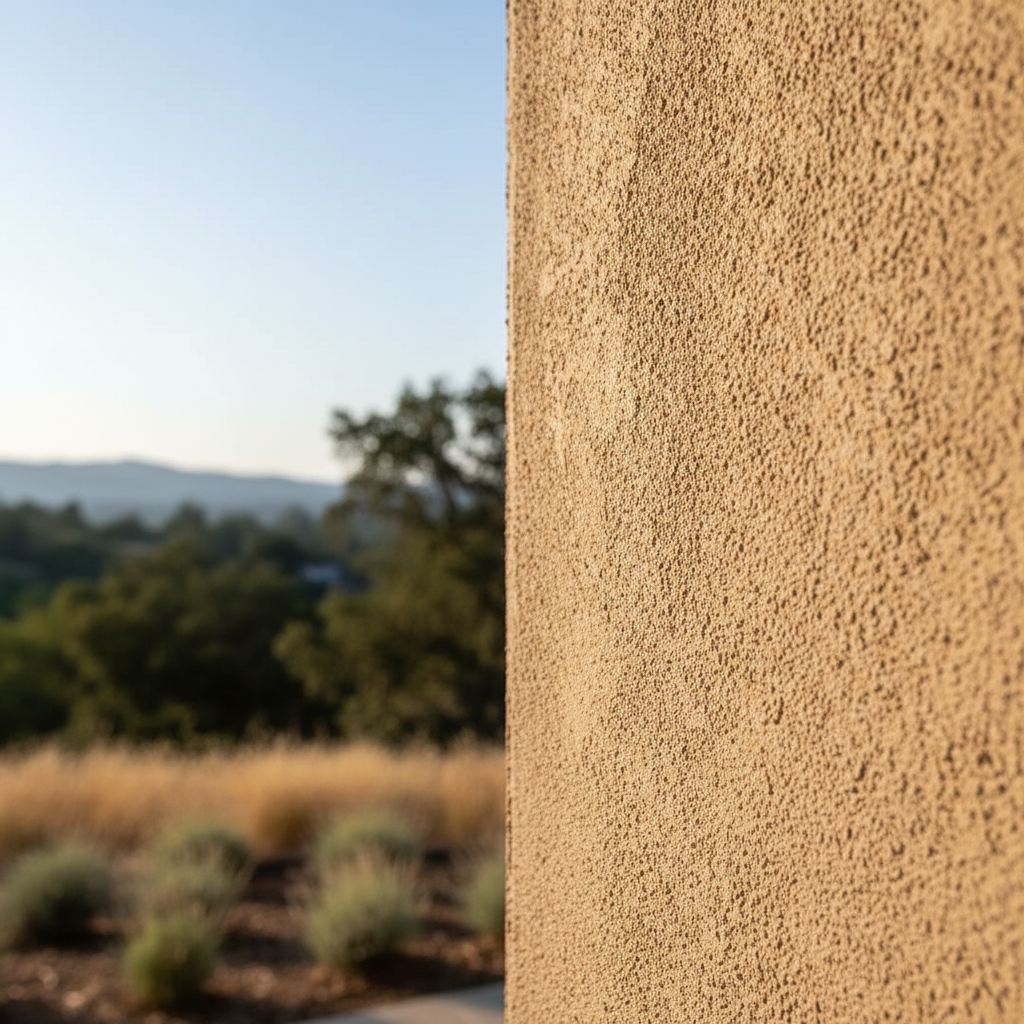
Walk around your house and look at the surface of your walls. Stucco is tough stuff, but around here in Portola Valley, where we deal with wet winters, shifting hillside soils, and plenty of dry summer heat, stucco takes a beating. Most homeowners do not think about their exterior until a chunk falls off or a patch of mold shows up near the ground line. That is usually too late. Neighborly Stucco wants to walk through how to check your own stucco before small issues turn into expensive framing repairs.
Before You Start Looking
You do not need a truckload of expensive gear to do a preliminary walkaround of your property. Grab a notebook, a flashlight, and a camera or your phone to snap pictures of anything that looks odd. Walk the perimeter of your house and clear away any stacked firewood, overgrown coyote brush, or ivy creeping up the walls. Stucco needs to breathe. If your landscaping is hugging the base of the wall, you are trapping moisture right where it can do the most damage. Take a look at your gutters too. If they are overflowing or leaking near the foundation, that water has nowhere to go but straight into your wall assembly.
During the Walkthrough: What to Look For
Start at the roofline and work your way down. Hairline cracks are common on older homes in neighborhoods like Wente or Central Portola Valley, and they are not always an emergency. But you need to know the difference between a harmless shrinkage crack and something more serious. If a crack is wider than a credit card, or if you see a pattern of stair-step cracks near the corners of your windows and doors, pay attention. That usually means the house is settling or moisture has gotten behind the lath. Press gently on the stucco around any cracking. Does it feel hollow? Does it give way under your thumb? That is a bad sign. Also, look closely at the weep screed down near the concrete foundation. If that metal track is buried under dirt or new paving stones, trapped water can not escape.
When to DIY vs. When to Call a Pro
You can easily handle the basic visual check, clearing out the brush, and monitoring small hairline cracks with a bit of elastomeric caulk if they are not moving. But the moment you spot bubbling paint, dark stains that will not dry out, or soft spots in the finish coat, stop right there. That points to moisture intrusion hiding deep inside the wall cavity. Neighborly Stucco gets calls all the time from homeowners who tried to patch a bulge themselves, only to find rotted wood framing underneath. A professional inspection involves thermal imaging and moisture meters to track water trails you can not see with the naked eye. If you suspect water is getting behind your siding, bring in someone who knows local construction styles. Neighborly Stucco provides Stucco Inspection services for homes in Portola Valley, CA.
After the Inspection
Once you have wrapped up your check, make a simple punch list. Clean out those gutters, pull back the mulch a few inches from the foundation, and seal up any tiny surface cracks before the rainy season hits. If you found major cracking, bulging, or water stains, get quotes lined up early. Contractors get slammed right before the winter storms roll through the valley. Keeping on top of small exterior maintenance means your home stays solid, dry, and looking sharp for years to come without nasty surprises.