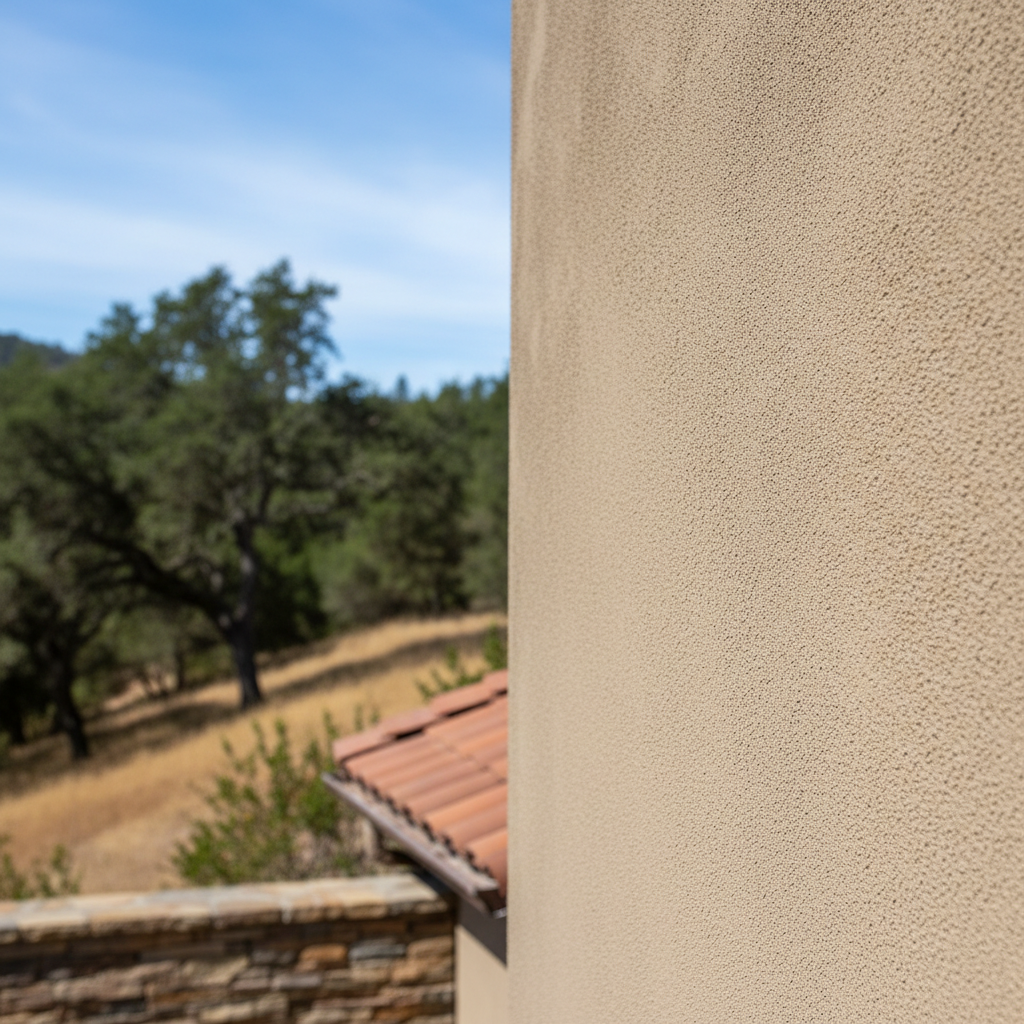
Alright, let's talk about stucco redashing. I get a lot of questions from folks right here in Portola Valley about this, and it's no wonder, really. Your home's exterior takes a beating from our dry summers and those occasional damp winters, and a fresh coat of stucco can make a huge difference. But there's a lot of misinformation out there, so I want to clear things up. Here are the real answers to the questions I hear most often.
What exactly is stucco redashing, and how is it different from a full replacement?
Simply put, stucco redashing means we apply a new, thin layer of stucco finish right over your existing stucco. Think of it like giving your house a fresh topcoat – a new skin, if you will. We'll clean the old stucco thoroughly, fix up any minor cracks, and then put down that new decorative finish.
A full replacement, on the other hand, is a much bigger job. It means tearing off all the old stucco down to the sheathing, fixing any underlying issues like water damage or structural problems, and then building up new stucco from scratch. That usually involves multiple layers: a scratch coat, a brown coat, and finally, the finish coat.
The big difference? Redashing is about refreshing the surface and adding a new layer of protection when the existing stucco is still structurally sound. Replacement is for those times when there are deeper problems that absolutely need to be addressed.
When is redashing a good idea, and when should I consider a full replacement instead?
Redashing is a smart move if your stucco is looking tired, faded, or has a lot of small, hairline cracks that are mostly cosmetic. It's a great way to update your home's curb appeal, change its color, or just restore its original beauty without the big cost and disruption of a full tear-off.
However, if you've got widespread cracking, bulging, soft spots, or signs of significant water damage like mold or rot underneath, then redashing isn't going to cut it. You'll need a full stucco remediation or replacement to properly fix those underlying issues. Just putting a new layer over existing problems is like putting a band-aid on a broken leg; it won't solve the real problem and will just lead to bigger headaches down the road. Trust me on that one.
Can you redash over painted stucco?
This is a common question. If your stucco has been painted, we generally can't just redash directly over it. New cement-based stucco won't bond properly to old paint, and it'll likely flake off. In most cases, we need to remove the old paint, often by sandblasting, to expose the raw stucco underneath. That way, the new coat can get a good mechanical bond. If the paint is in very good condition, sometimes we can use a bonding agent, but that's really a case-by-case basis.
How long does a redashed stucco finish typically last?
A properly redashed stucco finish, when the underlying stucco was sound to begin with, can last for many years. Stucco itself is a very durable material, with a lifespan of 50 to 80 years or even more with good maintenance. A fresh redash adds another layer of protection, helping to seal minor surface imperfections and resist our local weather. Regular maintenance, like cleaning and sealing every 5-10 years, will definitely help extend its life.
What's involved in the redashing process?
First, we do a thorough inspection of your existing stucco to make sure it's a good candidate for redashing. We're looking for good adhesion and structural integrity. If it's sound, we'll prep the surface by cleaning off dirt, mildew, and any loose debris. We patch up minor cracks to create a smooth, consistent base. Then, we apply a bonding agent to ensure the new layer sticks. Finally, we apply the new finish coat, making sure it's even and has the texture you've chosen. After that, there's a curing period where the new stucco hardens.
Will the new redash match my existing stucco texture and color perfectly?
Matching an existing texture and color perfectly can be tricky, especially if your surrounding stucco is aged or weathered. We work hard to blend repairs seamlessly, and we'll show you samples to help you pick a finish that complements your home. If you're redashing an entire wall or your whole house, achieving a uniform look is much easier than trying to patch a small section. We'll always discuss expectations upfront so you know what to expect.
Does redashing improve my home's insulation or energy efficiency?
While stucco itself offers some insulation benefits and contributes to energy efficiency, a thin redash layer primarily focuses on aesthetic renewal and surface protection. It won't dramatically change your home's R-value like adding insulation behind the walls would. However, by sealing up minor cracks and providing a fresh, continuous surface, it can help prevent air and moisture infiltration, which indirectly contributes to better energy performance. Every little bit helps, right?
How much does stucco redashing cost compared to full replacement?
Redashing is almost always more cost-effective than a full replacement because it involves less labor and materials. A full stucco replacement can range from $7 to $9 per square foot for traditional stucco, or even more for synthetic systems. Redashing, or resurfacing, can be significantly less, often in the range of $3 to $9 per square foot, depending on the complexity and finish. If your existing stucco is structurally solid, redashing is a fraction of the cost of a full re-stucco. But remember, if there are serious underlying issues, skipping a full remediation to save money upfront will likely cost you more in the long run.
I hope this helps you understand stucco redashing a bit better. If you're in Portola Valley and thinking about refreshing your home's exterior, give us a call at Neighborly Stucco. We're happy to come out, take a look, and give you an honest assessment of what your home needs.