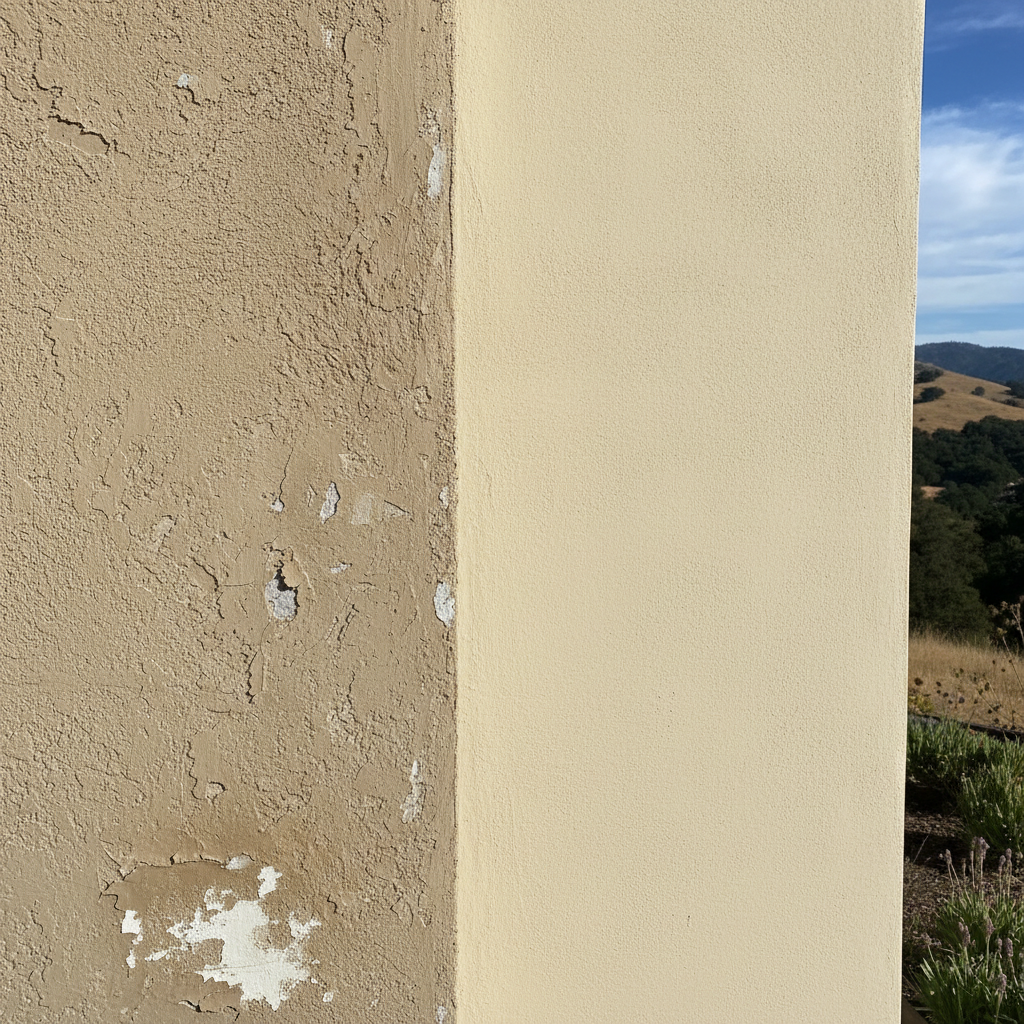
Alright, let's talk stucco redashing. If you've got an older home here in Portola Valley, or even a newer one that's seen some wear and tear, you're probably looking at giving your exterior a facelift. When it comes to redashing, you've mainly got two big options: traditional cement-based stucco or the newer synthetic (EIFS) systems. I get a lot of questions about which one's better, so let's lay it all out.
Traditional Stucco Redashing: The Classic Choice
This is what most people think of when they hear 'stucco.' It's been around for centuries, and for good reason. Traditional stucco is a mix of cement, sand, lime, and water. It's applied in layers over a lath system, usually metal, and then finished with a color coat.
Cost
Generally, traditional stucco is a bit more budget-friendly upfront. The materials are less expensive, and while the labor is still skilled, it's a more straightforward application process compared to synthetic systems. You're looking at a solid investment that won't break the bank immediately.
Durability & Maintenance
Traditional stucco is tough. It's hard, impact-resistant, and can really take a beating from the elements. Here in Portola Valley, with our occasional heavy rains and strong sun, that's a big plus. It breathes well, which is important for preventing moisture issues if installed correctly. Maintenance is pretty low; usually, a good wash every few years is all it needs. If it cracks (and it will, eventually, because cement shrinks), repairs are relatively simple and blend in well.
Appearance
You get that classic, earthy, matte finish with traditional stucco. It's got a natural texture that many homeowners prefer, especially for the more rustic or Spanish-style homes common around areas like the Portola Valley Ranch. You can get different textures, from smooth to rough, and a wide range of colors that are mixed into the final coat.
Synthetic Stucco (EIFS) Redashing: The Modern Approach
Synthetic stucco, or Exterior Insulation and Finish Systems (EIFS), is a different beast entirely. It's a multi-layered system that starts with an insulation board (usually foam), then a base coat with a reinforcing mesh, and finally a finish coat that looks like traditional stucco but is acrylic-based.
Cost
This is where synthetic stucco usually costs more. The materials are more specialized, and the installation process is more complex, requiring specific training and attention to detail. You're paying for the added insulation and the specific properties of the acrylic finish.
Durability & Maintenance
Synthetic stucco is incredibly flexible, so it's much less prone to cracking than traditional stucco. That's a huge advantage. It's also very impact-resistant due to its layered construction. The acrylic finish is more resistant to fading and staining, and it's also highly water-resistant. However, this water resistance can be a double-edged sword. If water *does* get behind it – say, from a poorly sealed window or roof flashing – it can get trapped and cause significant damage because it can't breathe out easily. Proper installation with rainscreen drainage is absolutely critical with EIFS. Maintenance is similar to traditional – washing is usually enough – but repairs can be trickier to match perfectly.
Appearance
Synthetic stucco offers a smoother, more uniform appearance. The colors are often more vibrant and consistent because they're acrylic-based. You can achieve very fine textures, even perfectly smooth, which is popular for modern architectural styles. It has a slightly less 'natural' look than traditional, but that's a matter of preference.
My Recommendation for Portola Valley Homeowners
For most homes here in Portola Valley, especially considering our climate and the architectural styles prevalent, I lean towards **traditional cement-based stucco** for redashing. Here's why:
- **Moisture Management:** While synthetic stucco can be great, the risk of trapped moisture if not installed perfectly is a big concern. Given our wet winters and the potential for heavy rain, traditional stucco's breathability is a significant advantage. It's more forgiving if there's a minor flaw in the waterproofing elsewhere.
- **Repairability:** Things happen. A kid throws a ball, a branch falls. Traditional stucco is easier and more cost-effective to patch and blend seamlessly.
- **Aesthetics:** The classic, natural look of traditional stucco just fits so well with the character of many Portola Valley homes, from the older ranch houses to the custom builds that aim for a timeless feel.
- **Cost-Effectiveness:** You get excellent durability and a beautiful finish without the higher upfront cost of EIFS.
That's not to say synthetic stucco is bad. For certain modern designs or specific insulation needs, it can be a fantastic product, but you absolutely need an installer who's certified and meticulous about every single detail, especially flashing and drainage. With Neighborly Stucco, we've seen firsthand what happens when EIFS isn't installed perfectly, and it's not pretty.
Ultimately, the best choice depends on your specific home, your budget, and what you're trying to achieve. But if you're looking for a reliable, time-tested, and beautiful finish that handles our local conditions well, traditional stucco is usually the way to go. Give us a call if you want to talk through your project – I'm always happy to share what I know.