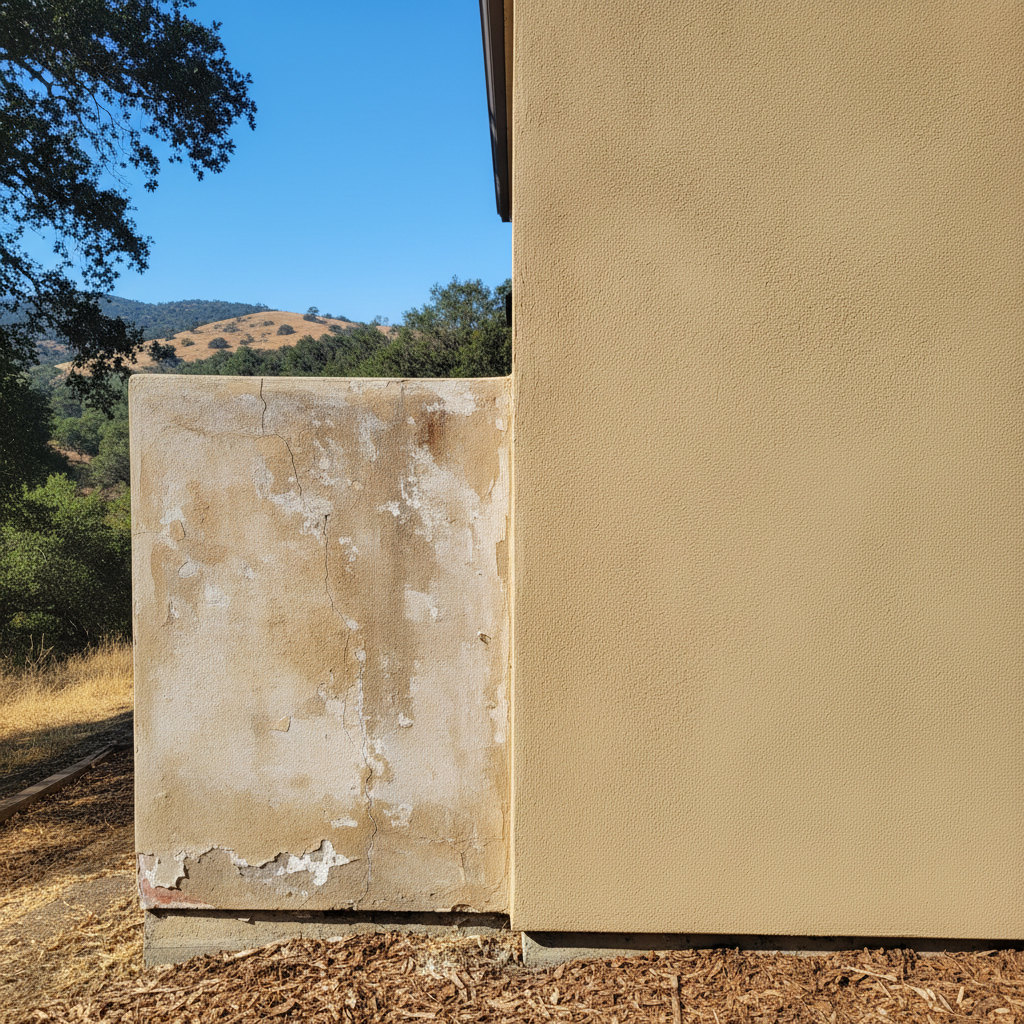
Alright, Portola Valley homeowners, let's talk stucco replacement. It's a big decision, and honestly, there's a lot of confusing stuff out there. You're not just picking a color; you're choosing a whole system that'll protect your home for decades. I've seen plenty of stucco jobs come and go in this town, from the houses tucked away near the Portola Valley Town Center to those perched up on the hills by Windy Hill Preserve, and I can tell you, making the right choice truly matters.
Today, we're going to dive into two main ways to replace stucco: traditional hard coat stucco and synthetic stucco (you might know it as EIFS). From the street, they might look pretty similar, but believe me, they're built differently and they perform differently. Understanding these differences is super important, especially with our local climate – those dry summers mixed with occasional damp winters, you know?
Traditional Hard Coat Stucco: The Old Reliable
This is the classic stuff, the kind that's been around for centuries. When we talk hard coat, we're talking about a cement-based plaster made from Portland cement, sand, and water, usually with a little bit of lime thrown in.
Cost
Generally speaking, traditional hard coat stucco is the more affordable option right off the bat. You're typically looking at something like $7 to $9 per square foot for us to put it on. The materials aren't as complicated, and even though it takes a lot of labor, the material cost itself is lower than what you'd pay for synthetic options.
Durability
This stuff is tough. Hard coat stucco dries to a rock-hard finish that can really take a hit. It stands up to a lot – whether it's a stray baseball, hail, or even fire. It’s known for being resilient and can easily last 50 years or more if you keep it up.
Maintenance
Traditional stucco doesn't need a ton of maintenance. It breathes, which means moisture vapor can pass right through it. That helps stop water from building up behind your walls. But, because it's so rigid, you might see tiny hairline cracks appear over time, maybe from your house settling or temperature changes. You need to patch those small cracks quickly to keep water out. Around here, with the ground sometimes shifting a bit, you'll definitely want to watch for them.
Appearance
Hard coat stucco gives you that classic, timeless look with a textured, natural finish. You can get all sorts of textures, from smooth to sandy to dash finishes, and we usually paint it for color.
Synthetic Stucco (EIFS): The Modern Way
EIFS, or Exterior Insulation and Finish System, is a multi-layered setup that's a bit newer to the construction scene. It's designed to look like traditional stucco but with some key differences.
Cost
Synthetic stucco usually costs more upfront than traditional stucco. You're typically looking at $8 to $14 per square foot. That's because it includes an insulation board and uses more advanced materials, you see.
Durability
EIFS is more flexible than traditional stucco, which means it's less likely to crack from temperature swings or your house moving a little. It's also very water-resistant. However, it can be more prone to impact damage like dents or punctures compared to hard coat stucco. Modern EIFS systems now have drainage planes built in to handle moisture effectively.
Maintenance
EIFS is generally considered pretty low maintenance because it's flexible and doesn't crack as easily. It holds color well and might not need as much patching. But, getting it installed correctly is absolutely crucial to avoid moisture problems. If water gets behind the system because of bad sealing or flashing, it can cause big headaches. Regular checks and resealing every few years are important to keep it in good shape.
Appearance
Synthetic stucco offers a huge variety of design choices, colors, and textures, including smoother, more uniform finishes. You can even mold it to look like other materials, like stone or brick. Pretty cool, huh?
My Recommendation for Portola Valley Homes
Considering our conditions here in Portola Valley – those warm, dry summers and the occasional wet winters – both options have their good points. But when it comes to stucco replacement, I usually lean towards traditional hard coat stucco with a strong, modern drainage system for most homes.
- Moisture Management: While EIFS is fantastic for insulation, traditional stucco's ability to breathe is a huge plus. It lets moisture escape, and that's critical for preventing hidden issues, especially when we get those heavier winter rains.
- Impact Resistance: Hard coat stucco is just plain tougher. You don't want to worry about a ladder slipping or a kid's ball leaving a big dent, right?
- Longevity: If it's installed and maintained properly, traditional stucco has a proven track record of lasting 50 years or more. That's a solid investment you can count on.
- Local Conditions: Our soil can shift a bit around here, and while traditional stucco can crack, those cracks are often easier to spot and fix than potential hidden moisture problems with EIFS if it's not put in perfectly.
That said, if energy efficiency is your absolute top priority, and you're willing to put money into a highly skilled, EIFS-certified installer who guarantees a super thorough drainage system, then modern EIFS can be a good choice. It really does wrap your home in a thermal blanket.
Ultimately, the best choice depends on your specific home, your budget, and what matters most to you. What I always tell folks is this: don't skimp on the contractor. The quality of the installation, especially the moisture barrier and flashing details, is actually more important than the material itself. And that's where Neighborly Stucco comes in. We've been doing this long enough to know what works and what doesn't in our unique Portola Valley environment.